How a Small Team Ran Kashmir's Biggest Hackathon
650+ registrations, 78 submissions, and 7 sponsor tracks at NIT Srinagar. How a small team verified every project with HackHQ.
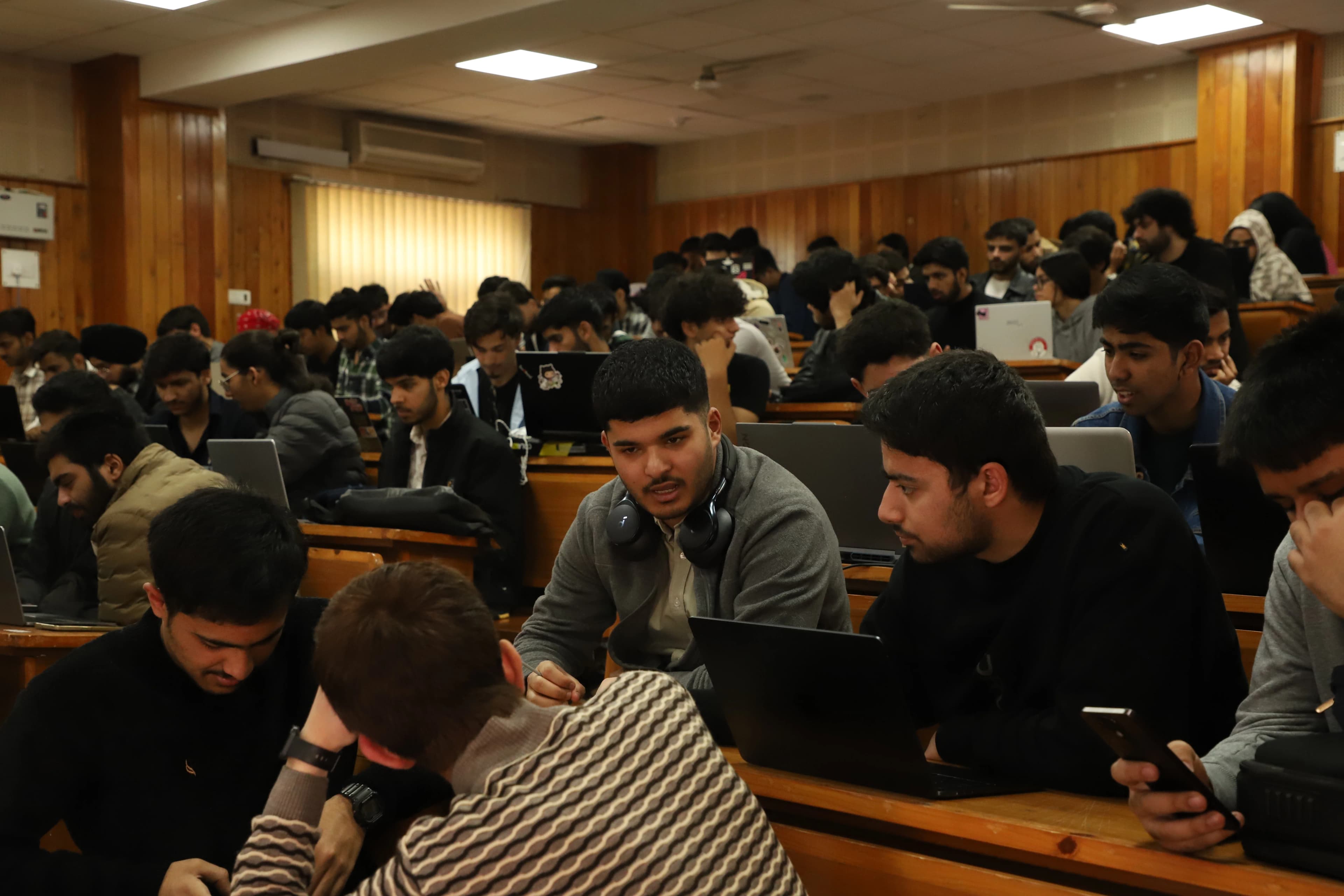
Cursor Hackathon Kashmir
NIT Srinagar, Kashmir
Sponsors
650+
Registrations
78
Submissions
7
Sponsor Tracks
7
Judges
Kashmir's Biggest Hackathon
Mohtasham Murshid Madani is a Cursor Ambassador and AI Engineer originally from Kashmir, now based in Malaysia. He'd organized hackathons before, but never one at this scale back home.
On March 28, 2026, Mohtasham launched Cursor Hackathon Kashmir at the National Institute of Technology in Srinagar, India. The 48-hour event challenged builders across India to "Build for the Next Billion", tackling real-world problems across healthcare, education, and agriculture.
650+ developers registered. 130+ teams formed. Seven sponsors signed on: Cursor, OpenAI, Convex, v0 by Vercel, Exa, Apify, and Mobbin, each with their own challenge track, judging criteria, and prizes. The most popular tracks drew 40 to 50 entries each.
Judges from NVIDIA, Oracle, LinkedIn, Dell EMC, and AIG evaluated the submissions. Five news outlets covered the event, and it aired on national television.
It was Kashmir's biggest hackathon ever.
Two Days of Building
Participants registered on Luma, while HackHQ handled submissions, judging, and results.
Teams submitted through a single shared HackHQ link with no accounts required. Each submission included a project title, description, demo link, GitHub repo, and which sponsor tracks the team was entering. On top of the seven sponsor tracks, every project also competed for the Grand Prize. Teams could enter multiple tracks, and on average, each project entered four.
With 130+ teams building simultaneously, submissions came in waves as the deadline approached. By the time it closed, 78 projects were in the system.
Every Repo, Verified Automatically
With 78 submissions in the system, there's a natural next question: were these projects actually built during the hackathon? At this scale, clicking through every GitHub repo isn't realistic.
HackHQ pulls data from each repo automatically and surfaces it directly alongside the submission. Open any project, and you see a commit timeline chart showing exactly when code was written relative to the event dates. The repo creation date is checked against the event start. Contributor count is compared to the registered team size. Forks are detected. Languages are broken down.
Everything is visible at a glance, right next to the project description, demo link, and scores. No need to open a single GitHub link.
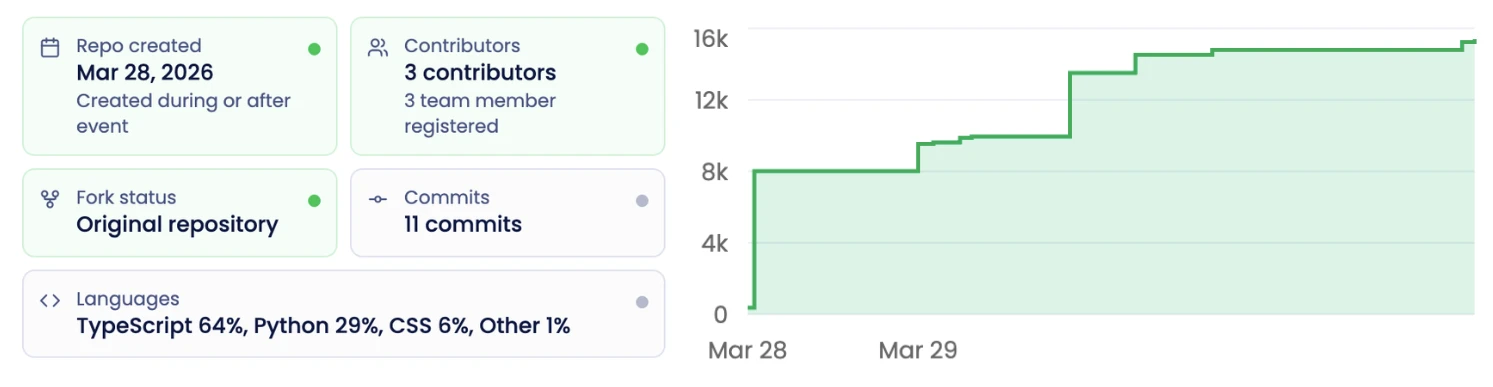
"With 78 projects, it's almost impossible to check every GitHub repo manually. The insights made it easy to verify project integrity across the board."
- Mohtasham Murshid Madani, Cursor Ambassador and Organizer
Judging with Confidence
With submissions verified, judges could focus on what mattered: the quality of the work.
Seven judges reviewed 78 projects across seven tracks, each with its own criteria. Teams entered four tracks on average, meaning a single submission could be scored against multiple sets of criteria simultaneously. HackHQ handled which criteria applied to which project, so judges just reviewed what was in front of them. Across all tracks, that added up to 475 individual scores.
Every judge completed their reviews. Every track had clear winners. From those scores, 15 teams advanced to a final round, where they presented to the full judging panel before winners were announced.
Reporting Back to Sponsors
After judging, each sponsor needed to see the projects that entered their track: who built them, what they submitted, and how they scored. Organizers filtered submissions by sponsor track and exported a CSV with full team details, project info, scores, and judge comments.
36 projects entered the Convex track alone. One export, filtered by track, and the data was ready to send to their team. Seven sponsors, seven exports, each with verified, scored submissions.
What's Next
Kashmir was Mohtasham's biggest event yet, but it won't be his last. As a board member of AISEA, Southeast Asia's largest AI builder network spanning 15+ cities, he's already looking at what comes next.
For community organizers running events with big ambitions, Kashmir proved what's possible: a professional, multi-sponsor hackathon with verified submissions, transparent judging, and sponsor-ready reporting, run by a small team of organizers without a dedicated operations budget.
About Cursor Hackathon Kashmir
Cursor is an AI code editor with a growing community of ambassadors and campus leads who organize hackathons worldwide. Cursor Hackathon Kashmir was organized by Mohtasham Murshid Madani, a Cursor Ambassador, AI Engineer, and board member of AISEA. The event was held at the National Institute of Technology (NIT) Srinagar on March 28-29, 2026, under the theme "Build for the Next Billion". It was supported by Cursor, OpenAI, Convex, v0 by Vercel, Exa, Apify, Mobbin, Kashmir Care Foundation, and The API Community, with HackHQ as the platform sponsor for submissions, judging, and results.
Ready to run your event with HackHQ?
Join organizers who focus on innovation, not administration.
Start free • 14-day money-back guarantee on paid plans